Inside RecTech: How Die and Screw Design Solve the Mono-Material Recyclable Film Problem
Recyclability Is Now a Design Requirement, Not an Afterthought
For most of the history of flexible packaging, barrier performance and recyclability pulled in opposite directions. The multi-layer structures that protect a product best, mixing EVOH, nylon, PE, and tie layers, are exactly the structures that are hardest to recycle, since mixed-material film cannot be processed through standard mono-material recycling streams. Regulation is now closing that gap fast, and manufacturers that cannot offer a genuinely recyclable structure are going to find themselves locked out of entire markets within a few years, not decades.
This is the problem RecTech was built to solve: how do you keep a film recyclable, built from a single polymer family rather than a mixed-material stack, without giving up the mechanical and barrier performance a mono-material structure has traditionally struggled to match.
Why Mono-Material Film Is Harder to Make Than It Sounds
A mono-material film, most commonly an all-PE or all-PP structure, has to do everything a traditional multi-layer film does using variations of a single polymer family instead of purpose-built layers. That means the same resin family has to deliver stiffness, puncture resistance, seal strength, and clarity all at once, typically by blending different grades and densities of the same polymer rather than stacking chemically distinct materials.
This is a much harder balancing act at the extrusion stage. Get the layer ratios or processing conditions wrong and a mono-material film either underperforms on strength and barrier compared to its multi-layer predecessor, or it fails to actually qualify as recyclable because trace amounts of an incompatible layer sneak into the structure. Both outcomes defeat the purpose.
What the RecTech Die and Screw Design Actually Changes
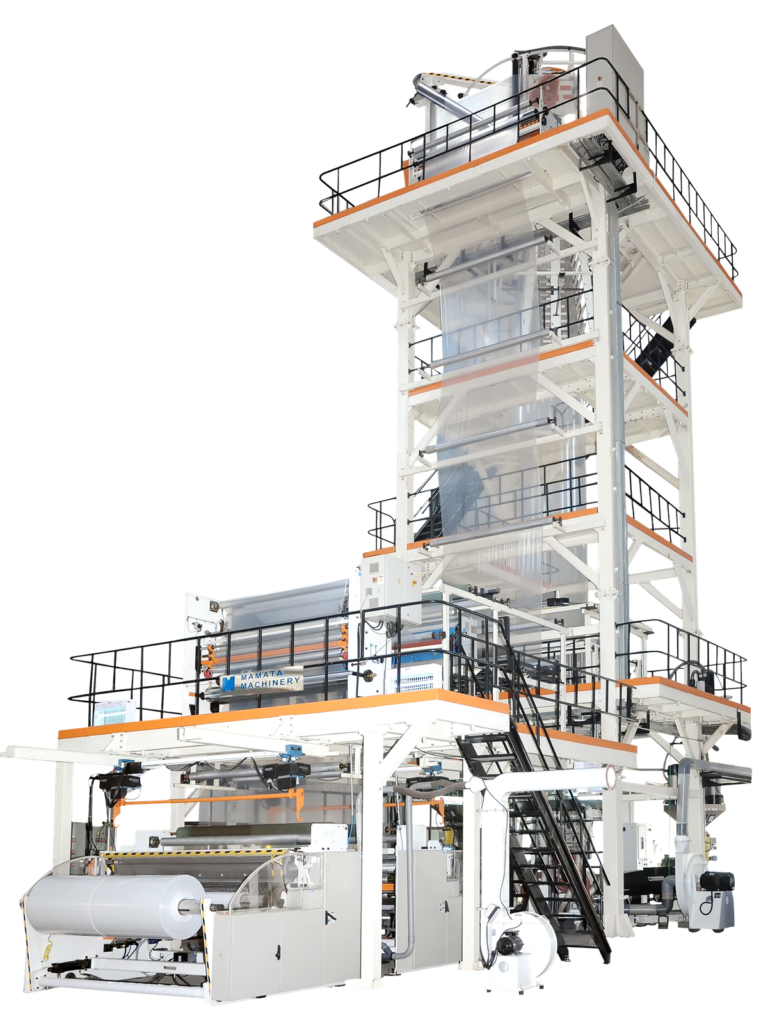
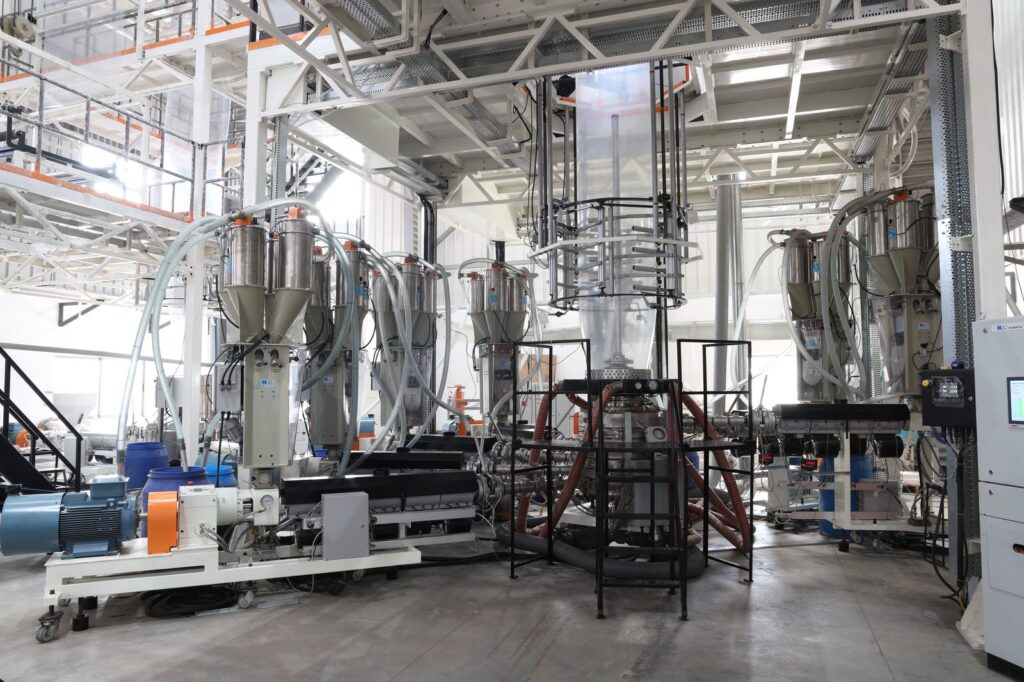
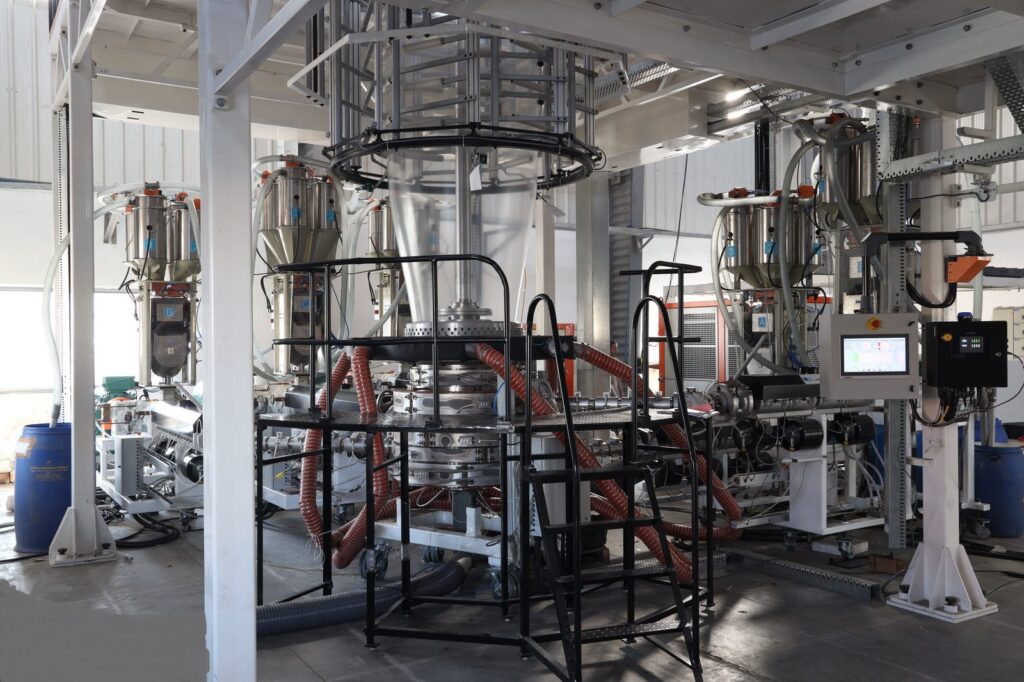
Mamata’s RecTech technology centers on a patented die and screw design, the hardware that shapes and processes the resin before it becomes film. Rather than treating recyclability purely as a resin formulation question, RecTech addresses it at the equipment level, giving the extrusion line the precision needed to process mono-material resin blends consistently enough to hit both mechanical and barrier targets without reintroducing incompatible layers.
This matters because a resin supplier can hand a converter a mono-material-compatible blend, but if the die and screw cannot process that blend with tight, repeatable control, the resulting film still underperforms. The die and screw design is effectively the bridge between a recyclable resin formulation on paper and a recyclable film that actually performs on a production line.
What Counts as Recyclable, and Why That Bar Keeps Moving
Recyclability is not a single fixed standard. Different regions and recycling streams define it differently, and mono-material thresholds (how much of an incompatible material a film can contain and still count as recyclable) have been tightening steadily as regulation catches up with sustainability goals. The EU’s Packaging and Packaging Waste Regulation is a clear example: it sets escalating recyclability requirements through the back half of the decade, which means a film structure that qualifies as recyclable today may not automatically qualify in a few years without further refinement.
This is part of why recyclable film technology cannot be treated as a one-time product launch. It has to be an ongoing capability, since the equipment and process need to keep adapting as the definition of recyclable keeps tightening around it.
What This Means for Brands Choosing a Film Structure
For a brand evaluating packaging, the practical question is not simply whether a film is labeled recyclable, but whether it is recyclable under the specific regional standard the product will be sold into, and whether the converter supplying it can document that. A film that is technically mono-material but was not engineered with process consistency in mind can still have enough structural variability to fail a stricter recyclability audit.
Brands making the shift to recyclable packaging are generally better served by asking their converter for the specific die and process technology behind a recyclable film claim, not just a resin name, since the equipment-level engineering is what actually determines whether that claim holds up consistently across a full production run.
Frequently Asked Questions About Mono-Material Recyclable Film
What Is a Mono-Material Film?
A mono-material film is a packaging film built from a single polymer family, most commonly all-PE or all-PP, rather than multiple chemically distinct layers. This makes it compatible with standard single-stream plastic recycling, unlike mixed-material multi-layer film.
Why Can't Traditional Multi-Layer Film Be Recycled Easily?
Multi-layer barrier film typically combines materials like EVOH, nylon, and PE that do not separate or reprocess cleanly together, which means most recycling streams cannot accept it, even though each individual material would be recyclable on its own.
Does Mono-Material Film Perform as Well as Multi-Layer Film?
It depends heavily on how it is engineered. A mono-material film built with precise die and processing control can approach multi-layer barrier and strength performance for many applications, though extremely high barrier requirements can still favor a multi-layer structure depending on the product.
What Is Driving the Shift to Recyclable Flexible Packaging?
Tightening regulation, such as the EU’s Packaging and Packaging Waste Regulation, combined with retailer and consumer pressure, is pushing brands toward recyclable formats on a timeline measured in years rather than decades.
The Takeaway
Mono-material recyclable film is not simply a different resin order. It is a different engineering problem, one that lives as much in the die and screw design of the extrusion line as it does in the resin itself. RecTech was built specifically to close that gap, giving converters the process precision needed to make a recyclable film claim that actually holds up under real-world production and tightening regulatory scrutiny.
For related reading, see our guide to barrier film types for how traditional multi-layer barrier structures are built, and our guide to smart, connected packaging machines for how equipment-level engineering is changing packaging lines downstream of extrusion too.