The Complete Guide to Multilayer Blown Film Structures
Why Layer Count Is the First Real Decision in Film Design
Before a brand or converter talks about resin grades, print finish, or barrier numbers, the conversation about a multilayer blown film actually starts with a simpler question: how many layers does this structure need. A three-layer film, a seven-layer film, and a nine-layer film are not just more expensive versions of each other, they are different tools built for different jobs, and picking the wrong layer count usually shows up later as either wasted cost or a film that quietly underperforms.
This guide walks through what each additional layer actually buys a converter, so the decision can be made around the product’s real requirements rather than defaulting to whatever a line happens to already run.
What Each Layer in a Multilayer Film Is Actually Doing
A multilayer blown film is never just “more plastic.” Each layer is assigned a specific job, and a well-engineered structure wastes nothing.
- Outer layer: Usually optimized for print receptivity, gloss, and stiffness, since this is the surface graphics are printed on and the one a consumer actually sees.
- Barrier layer: Typically EVOH or barrier nylon, placed internally where it is protected from moisture that would otherwise degrade its oxygen-blocking performance.
- Tie layers: Thin adhesive layers bonding chemically dissimilar materials together, since a barrier layer and a structural layer often will not adhere to each other without one.
- Structural or bulk layers: Usually lower-cost polyethylene, providing the mechanical strength, puncture resistance, and thickness that makes up the bulk of the film’s cost-effective volume.
- Seal layer: The innermost layer, engineered specifically for consistent, contamination-tolerant heat sealing on a packaging line.
Three Layers: The Workhorse Structure
A three-layer film is the baseline for a huge share of flexible packaging, typically a structural core sandwiched between a print-ready outer layer and a seal-ready inner layer. It is cost-efficient, runs well on standard converting and packaging equipment, and is the right call whenever barrier requirements are modest, moisture control more than oxygen control, and the product’s shelf life target is measured in weeks rather than many months.
The limitation is equally simple: a three-layer structure generally cannot deliver strong oxygen barrier on its own, since there is no dedicated layer assigned to that job.
Five and Seven Layers: Where Barrier Enters the Structure
Once a product needs real oxygen barrier, coffee, cured meats, cheese, a structure typically moves to five or seven layers specifically to make room for a dedicated EVOH or nylon barrier layer plus the tie layers needed to bond it to the structure around it. A five-layer film might use a single tie layer pairing, while a seven-layer structure often splits barrier and structural duties more precisely, for example separating stiffness from puncture resistance into their own layers rather than asking one layer to do both.
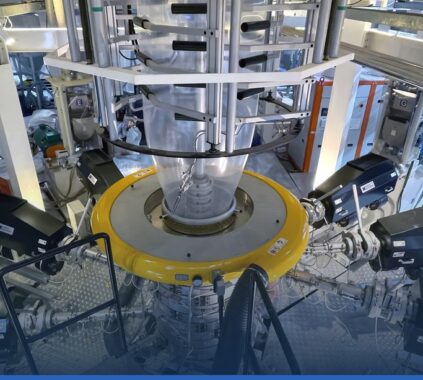
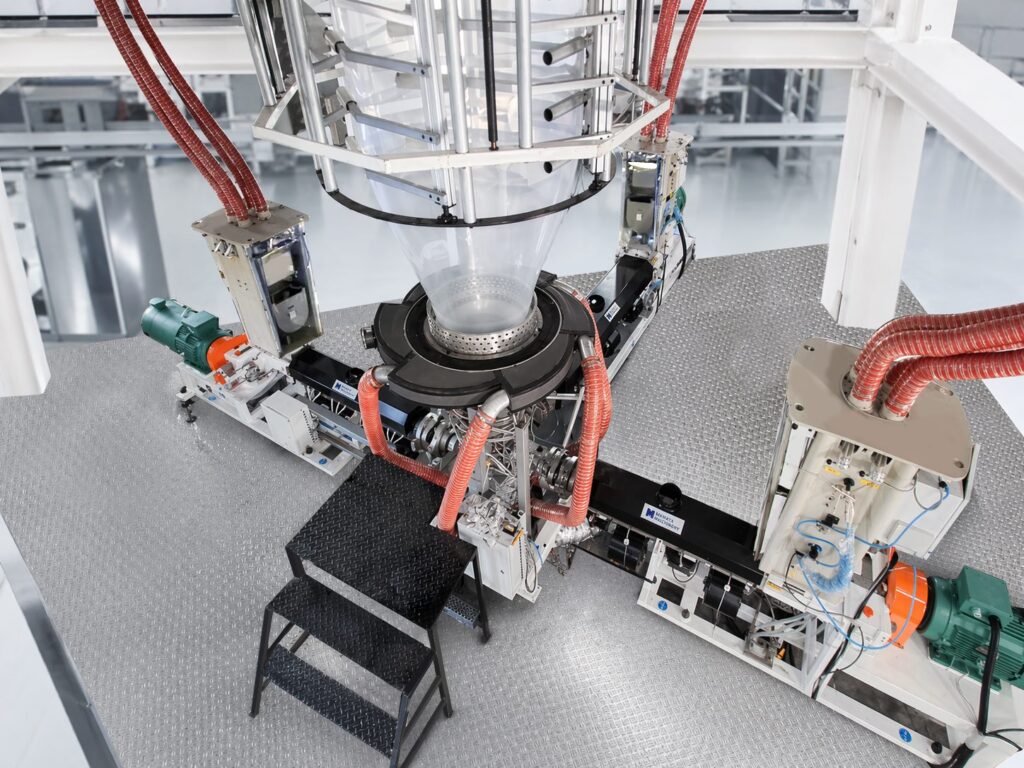
This is also where die design starts to matter enormously. More layers means more individual resin streams that have to be distributed evenly around the full circumference of the blown film bubble, and uneven distribution at this stage shows up as inconsistent barrier performance within the same roll, not just between rolls.
Nine Layers and Beyond: Precision for Demanding Applications
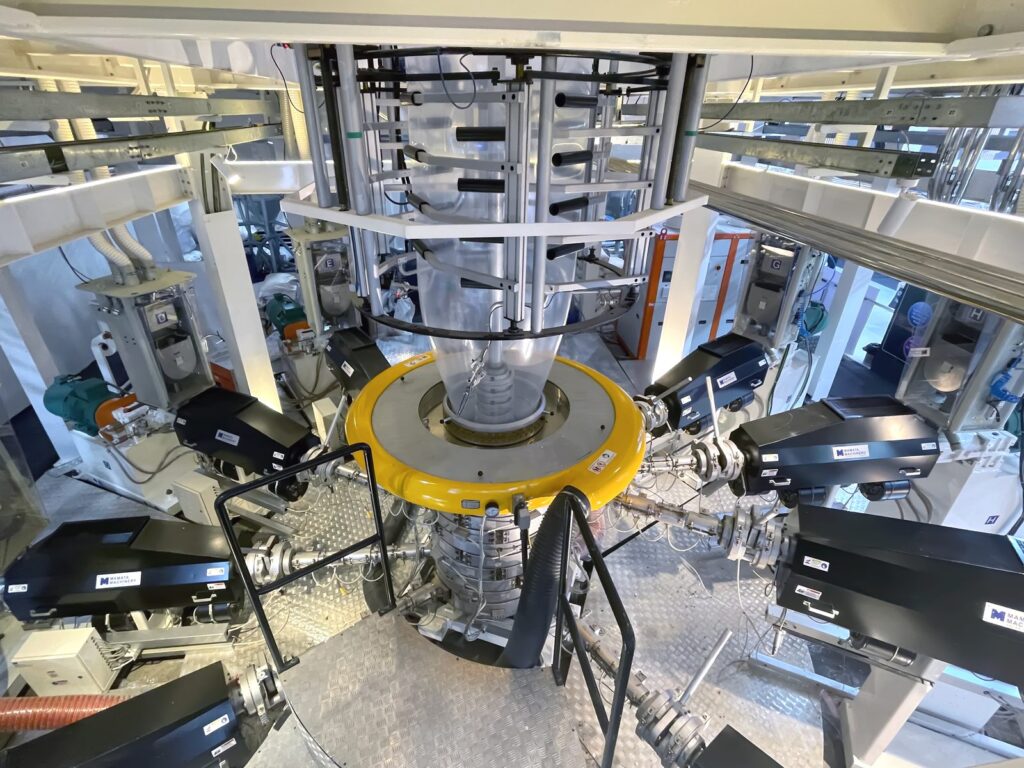
Nine-layer and higher structures exist for products with the most demanding combination of requirements at once, often very long shelf life, strong oxygen and moisture barrier, high mechanical performance, and specific regulatory compliance, such as certain retort or medical packaging applications. At this layer count, the line itself needs very tight process control, since the margin for error on temperature, layer ratio, and cooling narrows as more distinct materials are asked to cooperate in a single film.
Few products actually need nine layers. The decision should be driven by a genuine combination of barrier, strength, and compliance requirements, not by an assumption that more layers automatically means a better film.
How to Actually Decide the Right Layer Count for a Product
Start from the product’s actual failure mode rather than a generic barrier target. A dry snack losing crispness from oxygen exposure has a different requirement than a liquid product that needs puncture resistance during distribution. A practical approach: map the product’s real shelf life target, the specific thing it is protected against (oxygen, moisture, light, or a combination), and any regulatory requirements, then work out the minimum layer count that satisfies all three without over-engineering the structure.
Over-specifying layer count is a real cost, not just a theoretical one. A nine-layer structure costs meaningfully more to produce than a five-layer structure delivering the same practical shelf life for a given product, and that cost compounds across every roll produced over a production year.
Frequently Asked Questions About Multilayer Blown Film
How Many Layers Does a Typical Food Packaging Film Have?
It varies widely by product, but three layers is common for moderate barrier needs, five to seven layers is common where real oxygen barrier matters, such as coffee or cured meats, and nine or more layers is reserved for the most demanding combination of barrier, strength, and compliance requirements.
Does More Layers Always Mean Better Barrier Performance?
Not automatically. Barrier performance comes from the specific barrier layer material and its thickness, not from layer count alone. A poorly designed seven-layer film can underperform a well-engineered five-layer film if the barrier layer itself is not properly specified or processed.
Why Do Multilayer Films Need Tie Layers?
Many high-performance barrier and structural materials used together, such as EVOH and polyethylene, do not naturally bond to each other. Tie layers are thin adhesive layers placed specifically to bond chemically dissimilar materials so the film holds together as a single structure.
What Determines the Cost Difference Between Layer Counts?
Cost rises with layer count both from added material complexity (more distinct resins, including specialty barrier and tie layer materials) and from the more precise die and process control required to run a higher layer count consistently.
The Takeaway
Layer count in a multilayer blown film is not a marketing number, it is an engineering decision that should be driven directly by what the product needs to survive and for how long. The right structure is the simplest one that reliably meets the product’s actual requirements, not the most complex one available on a given line.
For related reading, see our guide to EVOH and tie layers for a closer look at how the barrier layer itself is built into a structure like this, and our guide to barrier film types for how these structures map to different packaging categories.