Barrier Film 101: Types of Barrier Film and How Oxygen and Moisture Protection Is Actually Built
Two Rolls That Look the Same, Perform Differently
Not every barrier film that looks the same performs the same. Two rolls of film can feel identical off the line and still behave completely differently once they are protecting a product on a shelf for six months. The difference almost always comes down to barrier properties, and those properties are decided long before the film ever reaches a packaging machine, back at the extrusion stage.
For converters and brands evaluating a barrier packaging film, understanding what is actually happening inside a multi-layer barrier film, and where that performance is built in, makes it much easier to spec the right film for the right product instead of relying on a datasheet claim alone.
What Barrier Film Actually Means
A barrier film’s job is to slow down or block the things that spoil a product: oxygen, moisture, aroma, and in some cases light. No single material blocks everything well, which is why almost every real barrier film is actually several thin layers of different materials fused together, each one doing a specific job.
- Oxygen barrier film: Typically built around EVOH or specialty nylon layers, critical for snack foods, coffee, and anything that goes rancid or stale on contact with air.
- Moisture barrier film: Usually built around polyethylene (PE) or polypropylene (PP) layers, important for products that either need to stay dry or need to retain their own moisture.
- Structural and seal layers: The layers that give the film strength, puncture resistance, and the ability to seal cleanly on a packaging line.
- Tie layers: Thin adhesive layers that bond chemically dissimilar materials, such as EVOH to PE, since many good barrier materials simply will not stick to each other on their own.
Types of Barrier Film Used in Packaging
Not all barrier film is built the same way, and the right type depends heavily on the product it is protecting. The main categories a converter typically chooses between are:
- EVOH-based barrier film: One of the strongest performers against oxygen transmission, commonly used for coffee, cheese, cured meats, and other products where even small amounts of oxygen shorten shelf life noticeably.
- Nylon-based barrier film: Offers a strong balance of oxygen barrier and mechanical toughness, often chosen where puncture resistance matters as much as oxygen protection, such as frozen food or vacuum-packed products.
- Metallized barrier film: A thin layer of aluminum vapor-deposited onto the film gives excellent light, oxygen, and moisture barrier at a lower cost than EVOH, though it sacrifices microwaveability and visual clarity.
- PVDC-coated barrier film: A coating-based approach that delivers strong moisture barrier, historically common in pharmaceutical blister packaging and certain food applications.
Each of these types of barrier film comes with tradeoffs in cost, recyclability, clarity, and processability, which is exactly why the film structure has to be engineered around the specific product rather than chosen off a generic spec sheet.
Where Barrier Film Is Actually Built: Blown Film Extrusion
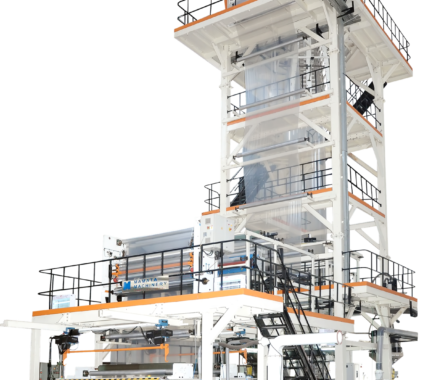
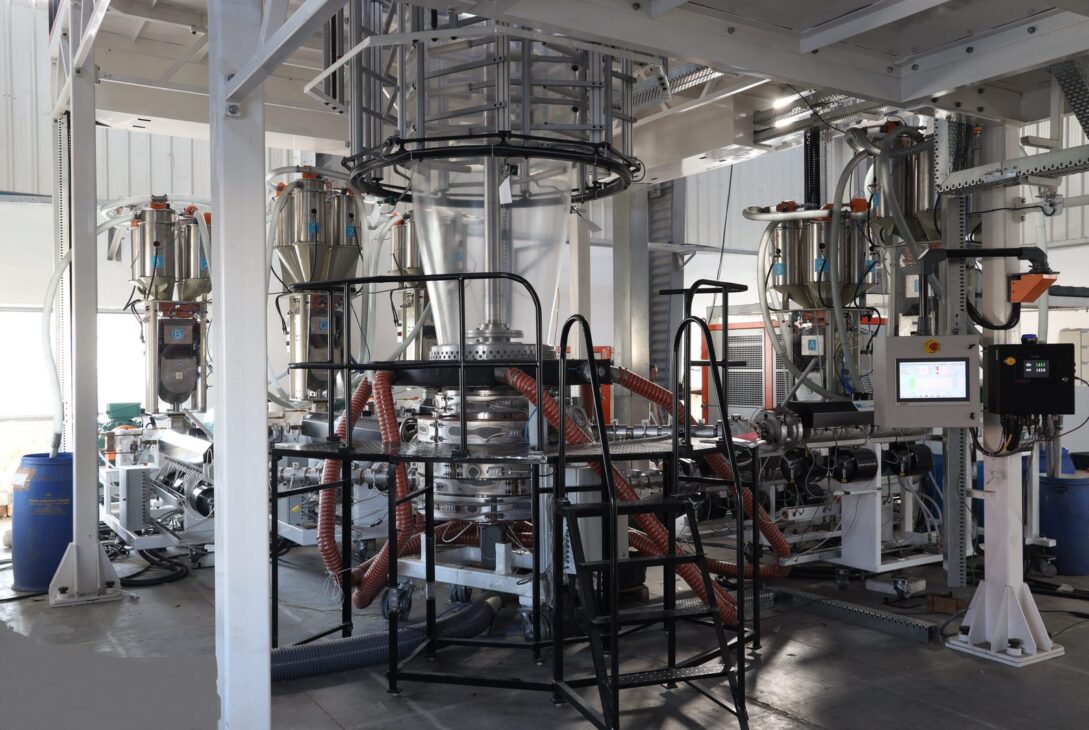
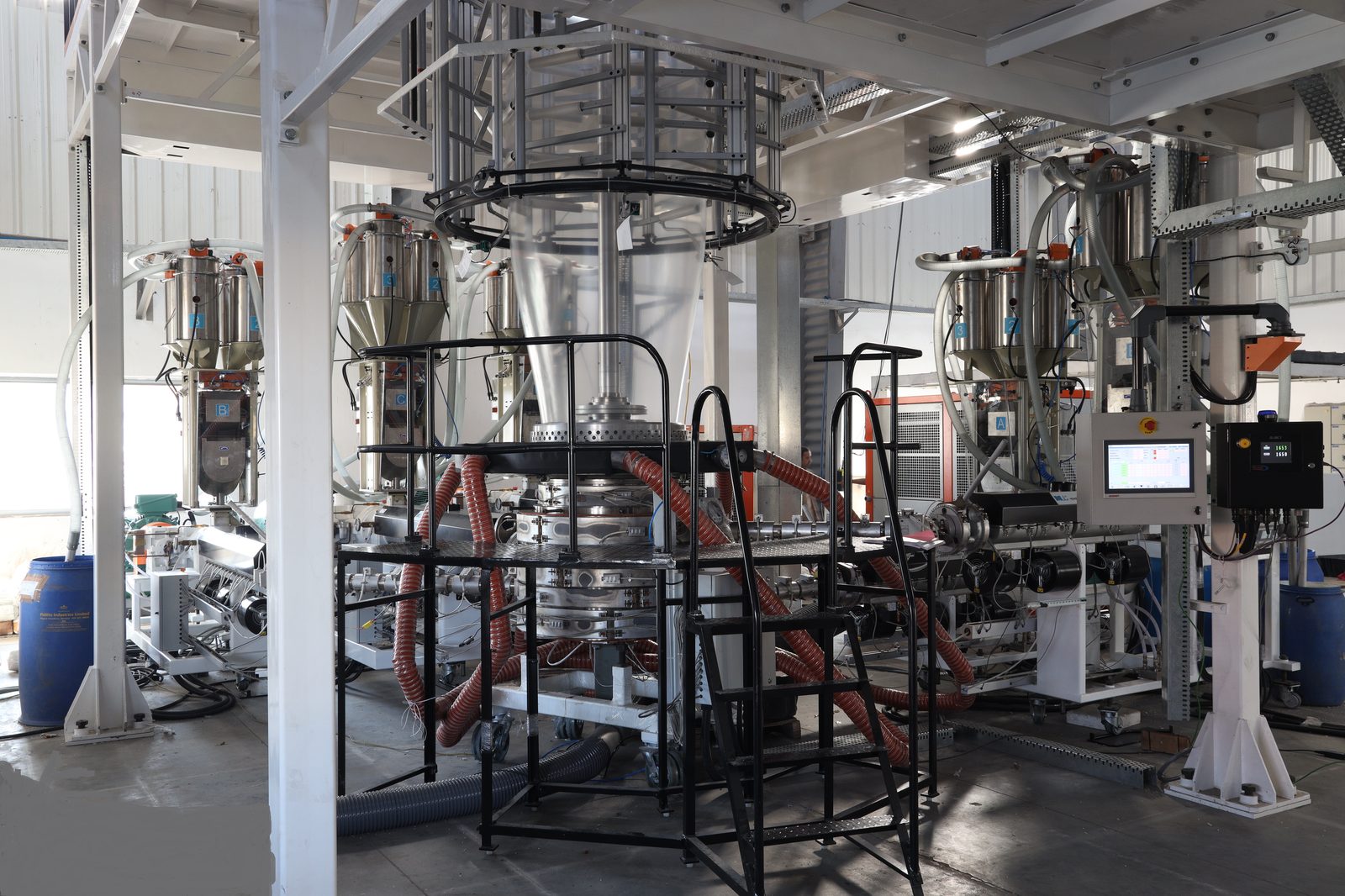
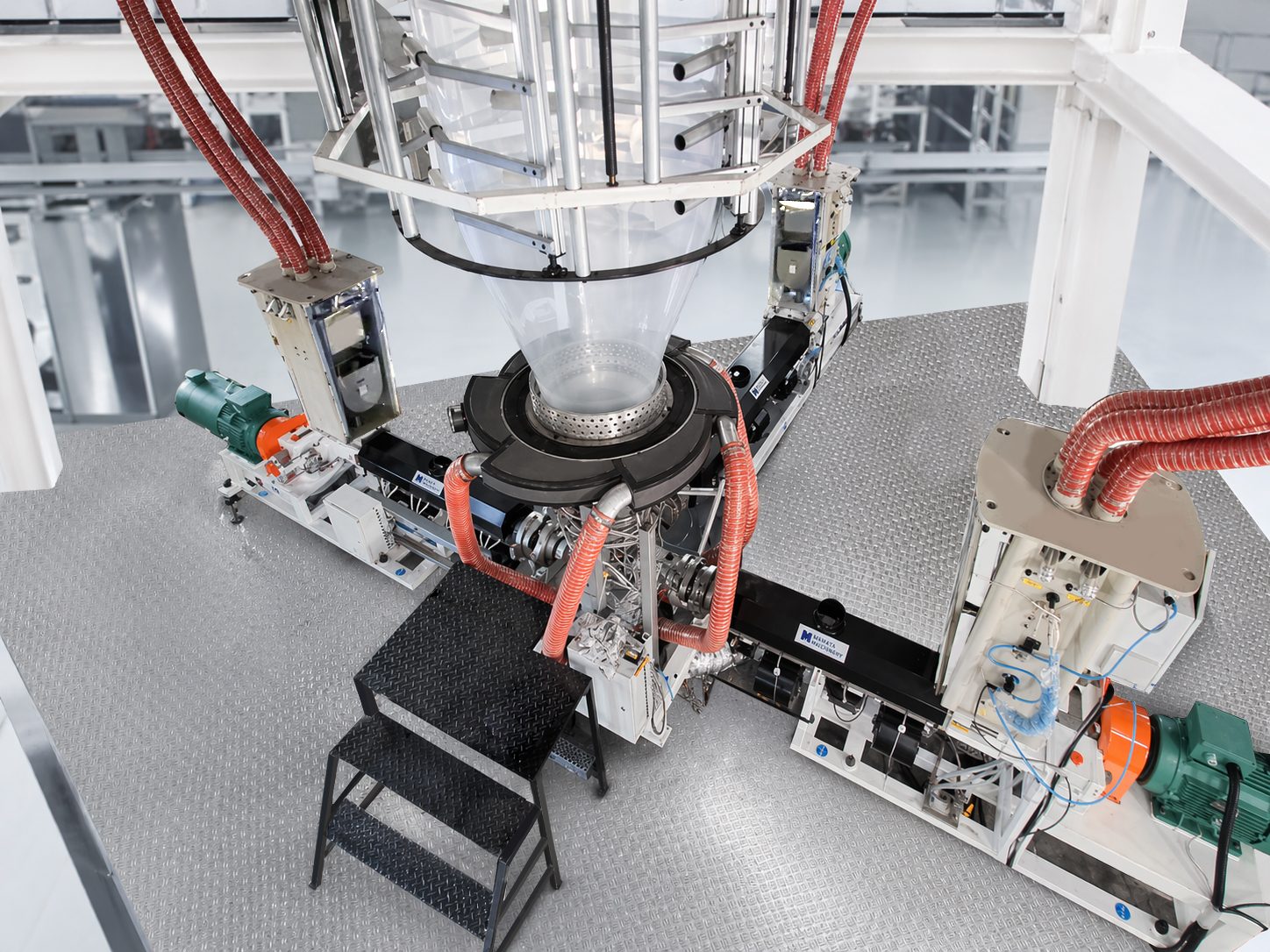
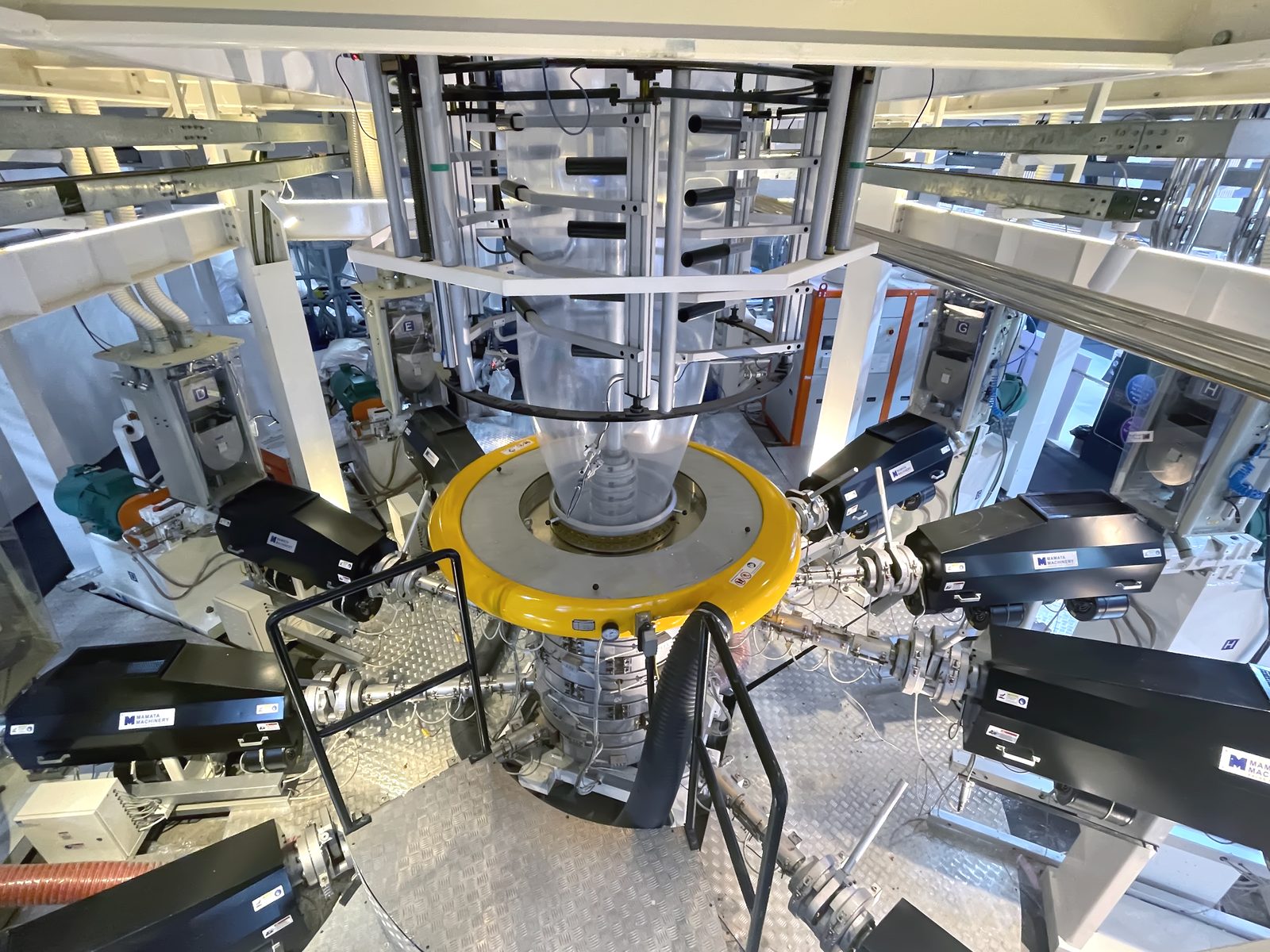
This is where a multi-layer blown film line earns its complexity. A single line can co-extrude three, five, seven, or more distinct layers simultaneously, each fed from its own extruder, metered precisely, and fused together while the film is still molten, all before it is even wound into a roll. Get the layer ratios, temperatures, or die design wrong, and the barrier properties on paper never show up in the finished film.
Die design is one of the trickiest parts of this. A multi-layer die has to distribute each resin stream evenly around the full circumference of the bubble, otherwise the film ends up with inconsistent layer thickness from one side to the other, which means inconsistent barrier performance even within the same roll. Cooling rate matters just as much. Cool too fast or unevenly and crystallinity in the barrier layer changes, which changes its permeability.
This is also why layer-to-layer adhesion, usually achieved through tie layers, matters as much as the raw resin choice. A blown film extrusion line engineered for precise multi-layer control gives a converter the flexibility to hit a specific barrier spec, say a defined oxygen transmission rate, consistently, roll after roll, rather than approximately.
How Barrier Performance Is Actually Measured: OTR and WVTR Testing
A barrier film claim is only useful if it has been tested, not assumed. The two numbers that matter most are Oxygen Transmission Rate (OTR), measured in cc per square meter per day, and Water Vapor Transmission Rate (WVTR), measured in grams per square meter per day. Both are tested under controlled temperature and humidity conditions, typically following standard methods such as ASTM D3985 for oxygen transmission, so results from different labs or suppliers can actually be compared on equal terms.
For converters, this matters at two points: validating a new barrier film structure before it goes into commercial production, and spot-checking production rolls over time to make sure the line is still hitting spec as it runs. A film that tested well in a lab trial but drifts out of spec on the production floor is not actually solving the problem it was designed for.
Where Barrier Films Actually Fail in Production
Most barrier film failures are not dramatic. They are small, consistent drifts that only show up once a product’s shelf life runs out early. A few of the usual culprits:
- Gauge variation: Thickness that varies across the web width, meaning parts of every roll are thinner, and weaker on barrier, than the spec implies.
- Delamination: Tie layers that do not bond fully, creating pockets where oxygen or moisture can migrate between layers rather than through them.
- Pinholes: Microscopic holes from contamination or process instability that destroy barrier performance locally, even if the surrounding film tests fine.
Each of these traces back to process control at the extrusion stage, including line speed, temperature profile, and die maintenance, rather than to the resin choice itself.
Choosing the Right Barrier Film for Your Product
Picking a barrier film structure starts with the actual failure mode of the product, not a generic barrier rating. A coffee brand is almost entirely fighting oxygen and aroma loss, so an EVOH-heavy structure with strong OTR performance makes sense. A dry powder product is fighting moisture ingress more than oxygen, so the priority shifts toward a stronger moisture barrier film layer. A frozen or vacuum-packed product adds puncture resistance to the list, which often points toward a nylon-based structure.
Shelf life targets, distribution conditions, and whether the pack needs to be microwaved, retorted, or frozen all narrow the choice further. This is why a barrier film conversation with a converter should start with the product and its failure mode, not with a layer count.
Barrier Film Across Different Industries
The specific barrier requirement changes considerably depending on the industry a film is serving, even when the underlying extrusion technology stays similar.
- Food and beverage: The largest user of barrier film by volume, covering everything from coffee and snack pouches needing strong oxygen barrier to cheese and cured meat packs needing both oxygen and moisture control simultaneously.
- Pharmaceuticals: Often needs moisture barrier film above almost anything else, since many drug formulations degrade on contact with humidity, which is why blister lidding and sachet films for pharma lean heavily on PVDC or aluminum-based structures.
- Industrial and agricultural products: Fertilizers, seeds, and certain chemicals need barrier film primarily to prevent moisture-driven caking or degradation during storage and shipping, often with less emphasis on oxygen barrier than food applications.
- Personal care: Barrier film protects actives in products like wipes and single-use sachets from drying out or oxidizing before first use, generally needing a lighter barrier spec than food or pharma.
Because the requirement shifts this much by industry, the same multi-layer extrusion line is often producing very different film structures from one production run to the next, which is exactly why flexible, precisely controllable layer ratios matter so much on the equipment side.
Food Contact Compliance and Regulatory Considerations
A barrier film also has to clear regulatory hurdles before it ever gets evaluated on performance. In most markets, any layer that can contact food directly has to comply with food contact material regulations, such as those enforced by the FDA in the United States or the equivalent EU food contact framework in Europe, which govern which resins and additives are permitted in direct-contact layers.
This becomes more complex in multi-layer structures, since regulators typically care about migration limits from the layer actually touching the product, not the barrier layer buried in the middle of the structure. A converter changing a tie layer or an outer print layer still needs to confirm the full structure remains compliant, not just the barrier layer itself. For pharmaceutical and medical packaging, additional standards around extractables and leachables testing often apply on top of standard food contact rules.
Cost Versus Performance: Balancing a Barrier Film Structure
Barrier film performance and cost move in the same direction almost every time. EVOH-based structures deliver the strongest oxygen barrier but cost meaningfully more per kilogram than a simple PE moisture barrier film. Metallized film offers a cheaper route to strong barrier numbers but gives up clarity and microwave compatibility. PVDC coatings add barrier at a lower cost than a full EVOH layer but raise end-of-life disposal and recyclability questions in several markets.
The practical approach most converters take is to match the barrier spec to the actual shelf life target rather than over-engineering it. A product that needs six months of shelf life does not benefit from a structure engineered for eighteen months, and the added cost of that over-specification compounds across every roll produced.
Frequently Asked Questions About Barrier Film
What Is a Barrier Film in Packaging?
A barrier film is a flexible packaging film engineered to block or slow the transfer of oxygen, moisture, aroma, or light into or out of a package, protecting the product inside and extending its shelf life.
What Is the Difference Between Oxygen Barrier and Moisture Barrier Film?
Oxygen barrier film is built to block oxygen transmission, typically using EVOH or nylon layers, while moisture barrier film is built to block water vapor transmission, typically using polyethylene or polypropylene layers. Most commercial barrier films combine both in a single multi-layer structure.
How Many Layers Does a Barrier Film Have?
Barrier films commonly range from three to nine layers, depending on how many distinct functions, such as oxygen barrier, moisture barrier, structural strength, and sealing, need to be built into the structure.
What Is a Good OTR Value for Food Packaging?
It depends entirely on the product. Highly oxygen-sensitive products like coffee or cured meat often require an OTR below 1 cc per square meter per day, while less sensitive dry goods can tolerate significantly higher values.
The Takeaway
Barrier film performance is not a label claim. It is engineered, layer by layer, at the point of extrusion, and verified with real OTR and WVTR testing rather than assumed from a resin spec sheet. For converters evaluating a new blown film line, the real question is not just how many layers it can run, but how precisely and repeatably it can control each of those layers, roll after roll. That precision is what turns a barrier film from a spec sheet into something that actually protects a product on the shelf.
For related reading, see our guide to pick fill seal machines for how pre-made barrier film pouches are filled and sealed, and our guide to tamper evident packaging for how converting builds security features into finished bags.